Some of the most meaningful lessons happen beyond textbooks and classrooms. At SSI Ambaji in the Aravalli valley, horse riding gives children a chance to build confidence, balance, discipline and a sense of responsibility — while discovering how joyful physical learning can be when nature is co-teacher.
Table of Contents
At our school, we believe that education is life itself, lived in balance. Today our students had the opportunity to experience something exciting and different — a horse riding activity designed to introduce children to the world of horses while developing confidence, balance, discipline and a sense of responsibility.
As A School That Doesn't School on the Ambaji-Danta Highway, we plan such moments deliberately. The Aravalli hills are not a backdrop; they are our open-sky classroom where Dimensions of Learning come alive — and Learning with Nature. Growing with Purpose. is a daily practice, not a poster.
Beyond Textbooks: Why Experiential Learning Matters at SSI Ambaji
Experiential learning is an important part of a child's development. When children step outside their usual learning environment and interact with the world around them, knowledge turns into understanding.
Activities such as horse riding allow students to observe, participate, ask questions, follow instructions, overcome hesitation and reflect on their experience. They connect what they read with what they feel — the weight shift, the rhythm, the need to stay calm and attentive. This kind of learning helps children link classroom concepts — from balance and body mechanics to empathy and communication — with real-world experiences they remember.
This is the SSI way: our essence is innovation-first, values-anchored. The campus is a living classroom where nature as co-teacher guides every lesson, the best classroom has no walls, and children are protagonists — curious explorers who learn by doing, not just by listening. Our Panchkosha approach nurtures Annamaya (physical), Pranamaya (vital), Manomaya (emotional), Vijnanamaya (intellectual) and Anandamaya (joy) together, so a single activity can build body, mind and character at once.
Core Takeaway: At SSI Ambaji, experiential learning turns knowledge into lived understanding — children observe, participate, reflect and carry the lesson beyond the classroom.
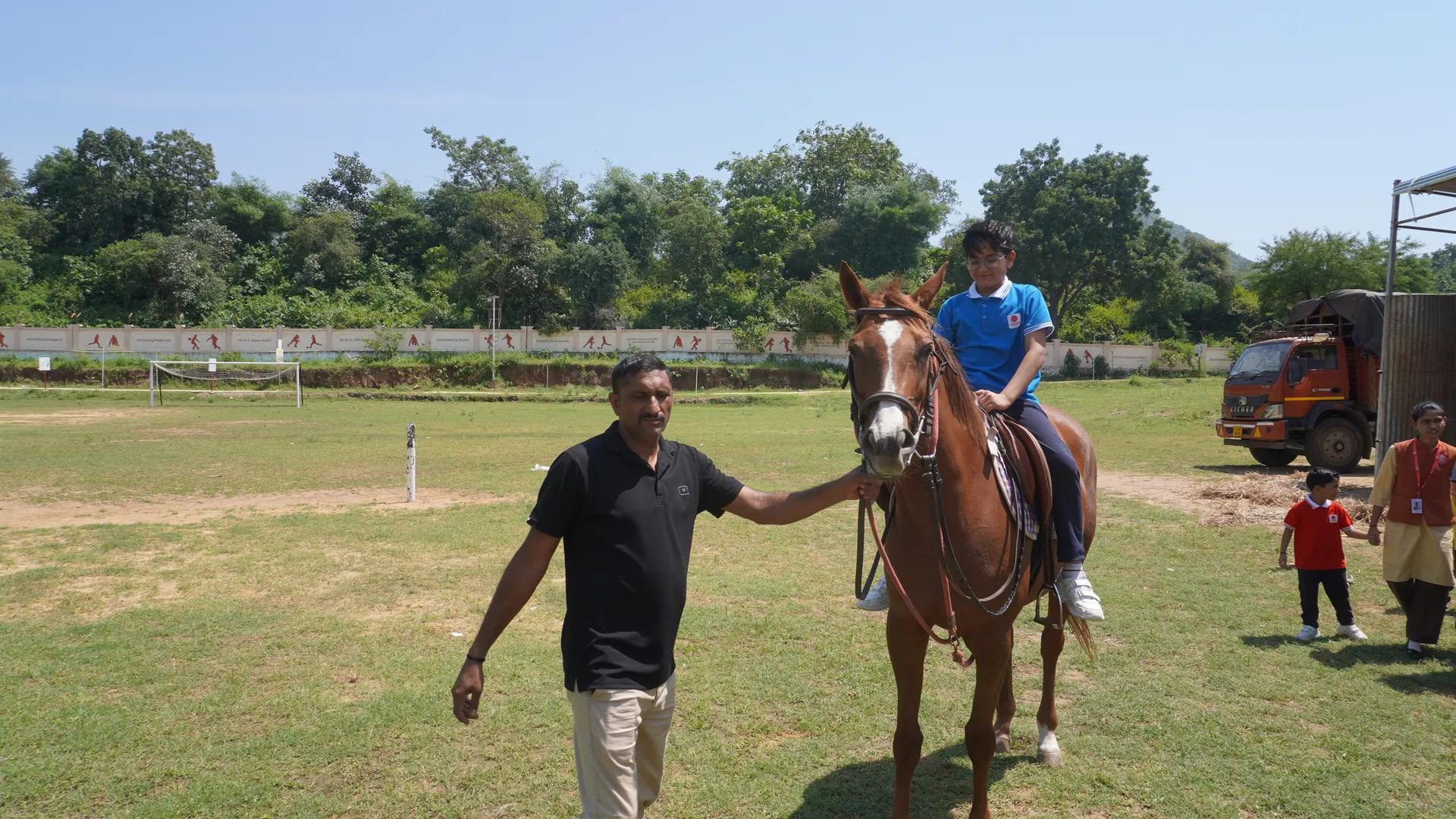
Confidence, Balance and Discipline in the Saddle
For many children, the first approach to a horse is a mix of excitement and hesitation. That hesitation is the learning edge. With gentle guidance, a child steps forward, greets the horse, holds the reins with care, and learns to sit upright with eyes forward. Each small success — mounting with help, finding balance at a walk, stopping and starting on instruction — builds quiet confidence.
Horse riding asks for discipline that children can feel, not just hear about. They listen to the instructor, wait for the cue, maintain posture, and respond calmly to the horse's movement. The reward is immediate: when they follow instructions at the right time, the horse responds, and the ride steadies. This feedback loop teaches self-regulation and focus more effectively than any lecture.
Balance is both physical and emotional. Staying centered in the saddle while the horse moves requires core stability, but it also requires calm breathing and trust. At SSI, our coaches and mentors frame every turn as character building alongside academic excellence — where courage is practised in safe steps, and discipline is kind, consistent and child-centered.
"Some of the most meaningful lessons happen beyond textbooks — when a child overcomes hesitation, finds balance, and discovers they can lead with calm, not force."
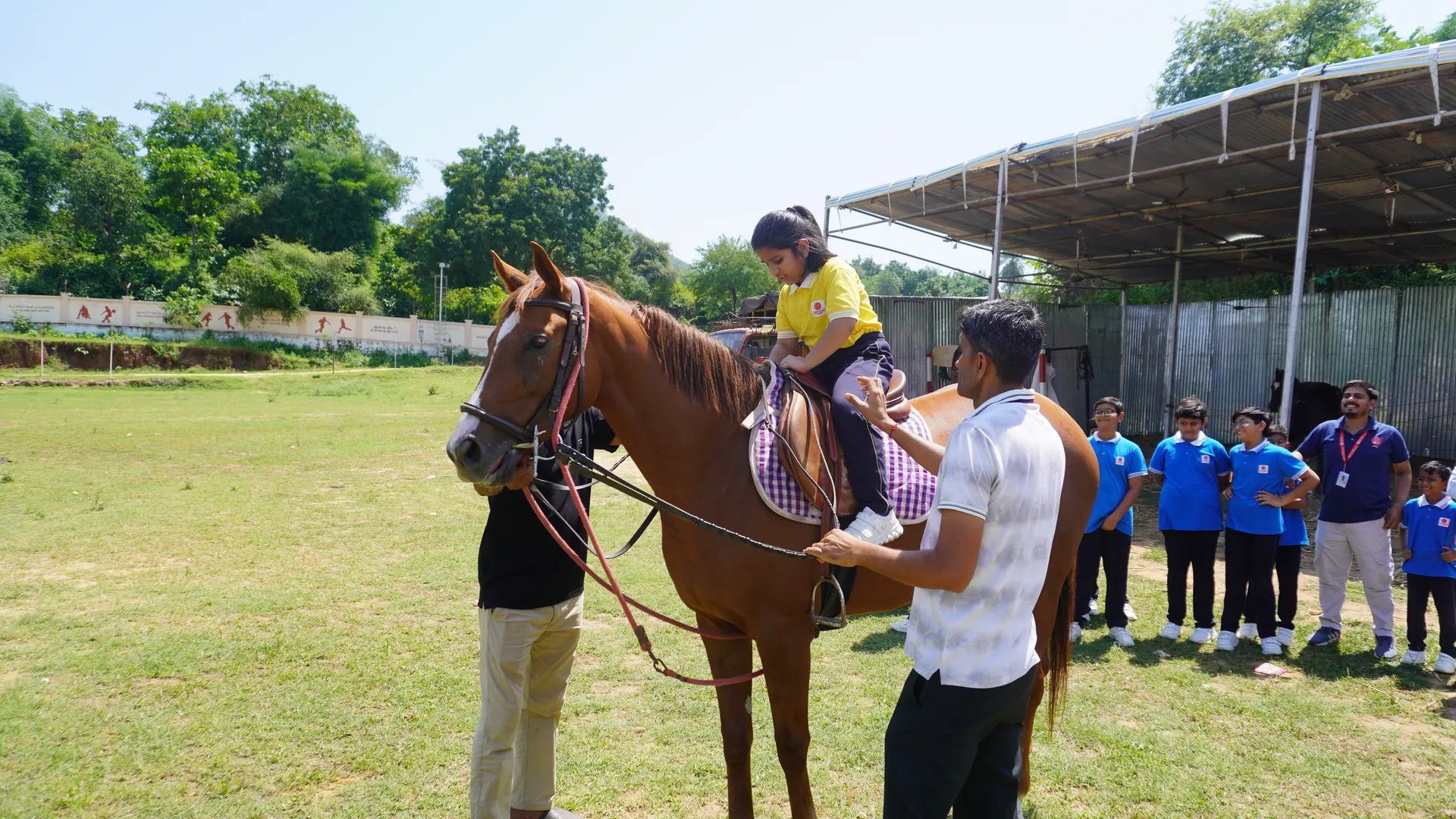
Physical Coordination and Body Awareness Through Horse Riding
Horse riding also provides children with an opportunity to develop physical coordination in the most joyful way. Maintaining a proper riding position requires children to coordinate their body movements while responding to the horse's movement. They learn to sit upright, maintain balance, engage their core, hold the reins with soft hands, and follow instructions at the right time.
Such experiences encourage children to become more aware of their body movements while making physical activity enjoyable and engaging. Unlike repetitive drills, riding is responsive: the horse moves, the rider adjusts; the instructor cues, the rider answers with posture and rhythm. This live interplay strengthens proprioception, posture and bilateral coordination — foundations that support sports, dance, yoga and everyday confidence in movement.
This aligns with our Annamaya focus within Panchkosha — a strong, well-cared-for body supports a focused mind. From Early Years to Middle Years, SSI weaves movement into learning intentionally. Families can see how we scaffold these stages in Early Years Preschool to Grade 3 and Middle Years Grades 4 to 8, where physical education, yoga and outdoor play are not extras but essentials of the timetable.
Core Takeaway: Horse riding builds physical coordination by teaching children to stay upright, balanced and responsive — body awareness learned through joyful, real-time movement.
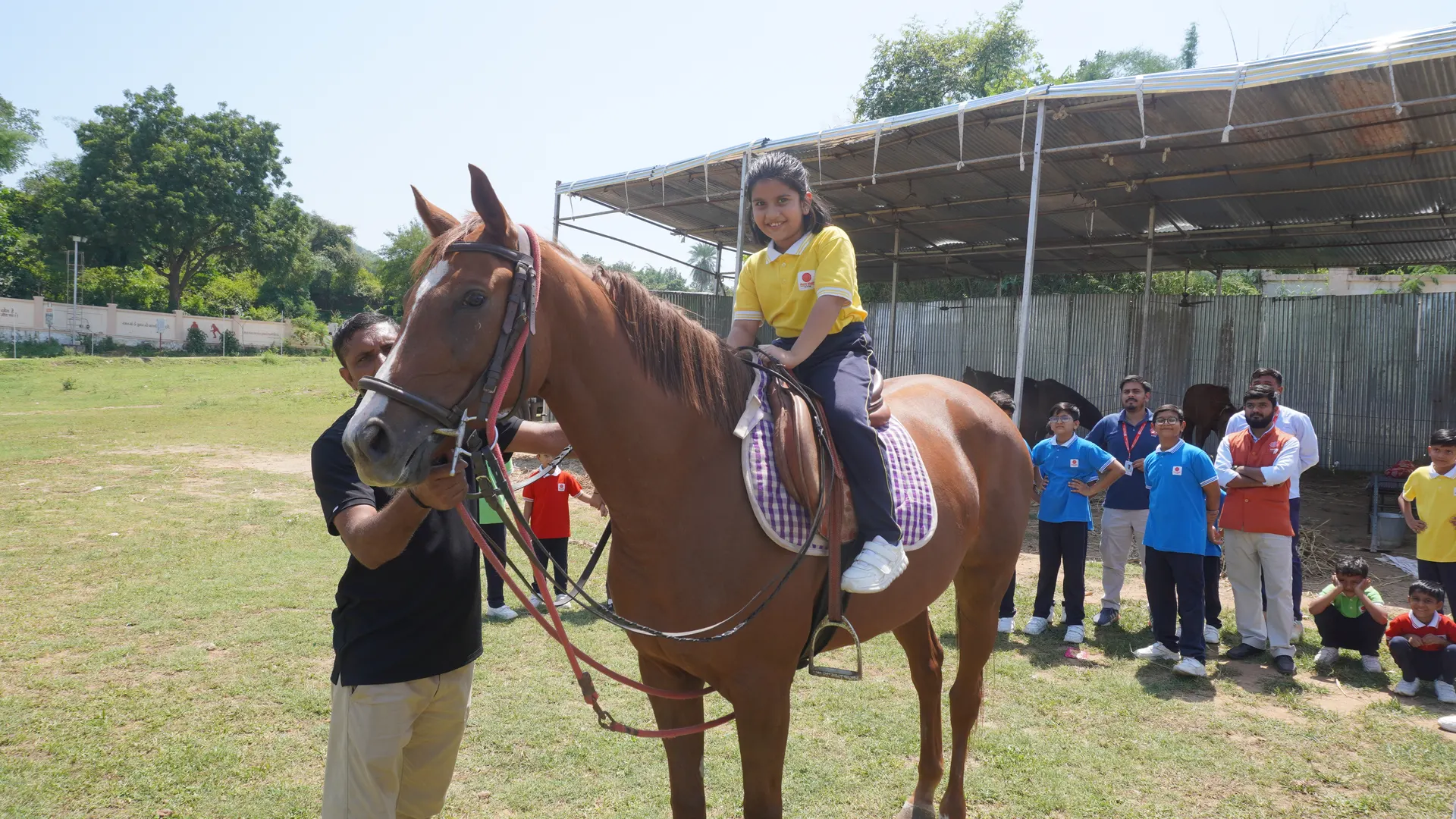
Learning with a Living Partner: Responsibility, Respect and Empathy
A horse is not equipment; it is a living partner. Before children ride, they learn to approach respectfully, speak softly, and notice how the horse responds to calm and care. This early lesson — that leadership is gentle and trust is earned — stays with them long after they dismount.
Caring for the partner matters as much as riding it. Students observe grooming, tack and safety checks, and learn why patience and consistency matter. They wait for their turn, encourage peers, and celebrate each other's first steady walk. In this way, horse riding nurtures empathy, responsibility and community — values we return to daily across our mission for meaningful and sustainable education.
A Grade 5 student summed it up after her first ride: "I was nervous at first. Then I breathed, sat tall, and the horse listened. I felt brave and calm at the same time." A mentor added, "When children learn to lead with kindness, they carry that leadership into classroom, playground and home."
"From awareness to responsibility to respect for nature — when children learn to care for a horse, they practise the same care for people and planet."
How SSI Makes Horse Riding Safe, Inclusive and Joyful
Joy needs safety to flourish. Horse riding at SSI Ambaji is conducted with trained handlers, calibrated introduction for first-time riders, and clear safety briefings. Children ride in supervised turns, with instructors walking alongside, helmets checked, and horses chosen for temperament and suitability for school-age beginners.
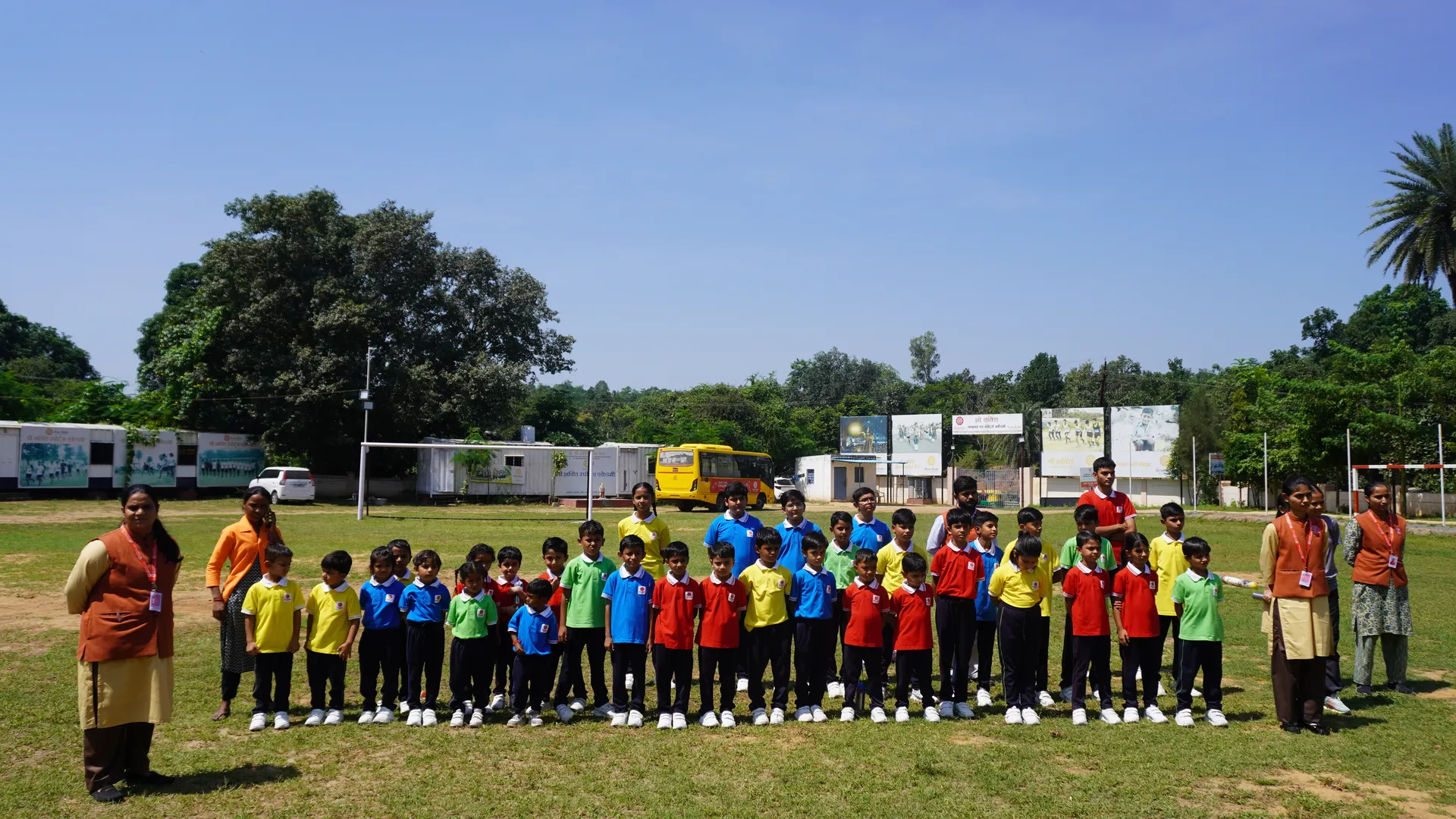
The design reflects our broader promise as an IGBC Green Schools Platinum campus and a CBSE day + boarding school in the Aravallis — green proof, not greenwash. SSI Ambaji holds IGBC Green Schools Platinum certification, the highest Global Leadership level awarded to new schools scoring 88–110 points on the IGBC framework. Water, energy, materials, indoor environmental quality and innovation are points children can point to: rainwater channels they monitor, daylight-filled verandahs where they line up before the ride, native planting that keeps the air and spirit light.
Inclusivity guides participation. Every child is invited to observe first, ask questions, and step in when ready. Boarders and day scholars learn together, cheer for each other, and reflect together afterward — journaling what they felt, what they learned, and what they want to try next time. That reflection, shared in morning circles, turns a one-day activity into a continuing habit of courage and care.
Parents often ask how such experiences fit academics. The answer is in our timetable: physical education and pastoral care are integral to CBSE learning, not interruptions. See how life on campus blends study, play, service and reflection — all within a nature-immersive, pollution-light environment that helps children focus and belong.
Conclusion: Growing with Purpose — One Ride at a Time
A single ride can teach a child to sit tall, breathe steady and lead kindly. Repeated thoughtfully, it shapes compassionate future leaders who are confident in body, calm in mind and respectful in relationship — with people, animals and the natural world that holds our SSI valley.
That is the SSI promise: Learning with Nature. Growing with Purpose. From the morning assembly under open sky to the quiet reflection after the last ride, children learn that discipline can be joyful and that responsibility feels good when it is shared.
We invite you to come see it. Admissions are open for day school and residential boarding — contact us to book a campus tour and experience A School That Doesn't School, where every slope, smile and saddle moment is part of the curriculum.
Frequently Asked Questions
Watch Confidence Grow — Visit SSI Ambaji
Give your child learning beyond the classroom — horse riding, nature and CBSE excellence in the Aravalli valley. Admissions open for day school and residential boarding.